
"The best time to plant a tree is 50 years ago.

The second best time to plant a tree is now."

Maumee’s Urban Forest:

Since 1990, the city has lost more than 30 percent of its trees, dropping canopy coverage from 31 percent to just 21 percent. Much of this loss came from the emerald ash borer, which wiped out thousands of ash trees, and for years, removals outpaced new plantings.

With guidance from the Maumee Environmental and Tree Advisory Commission, the city has focused on reversing that trend. Our goal is to restore Maumee’s tree canopy to 30 percent or more — not only by planting new trees, but by carefully maintaining the young trees recently added and protecting the mature trees that remain.

The Environmental and Tree Advisory Commission was established in 2022:

The Environmental and Tree Advisory Commission helps the City of Maumee develop integrated environmental policies that protect and improve our air, water, land, trees, and public health. The commission advises the City on strengthening the tree canopy; caring for, planting, and replacing public trees; improving natural and built environments; and educating the community on environmental issues. The commission serves in an advisory role only and does not have regulatory authority. It may prepare plans or recommendations for City Council to consider as policies or ordinances.

Members of the Commission are Isiah Gonzalez and Scott Sund (Council Reps), Margo Puffenberger (chair), Jaimie Deye (secretary), Bill Buri, Steve Emerine, Jodi Haney, Mark Irmen, Linda Faye Lucas, Dave Ross, and Robert Schuster. 

The Commission meets on the fourth Monday of the month at 5 PM in the council chambers.

Street Tree Design Plan:

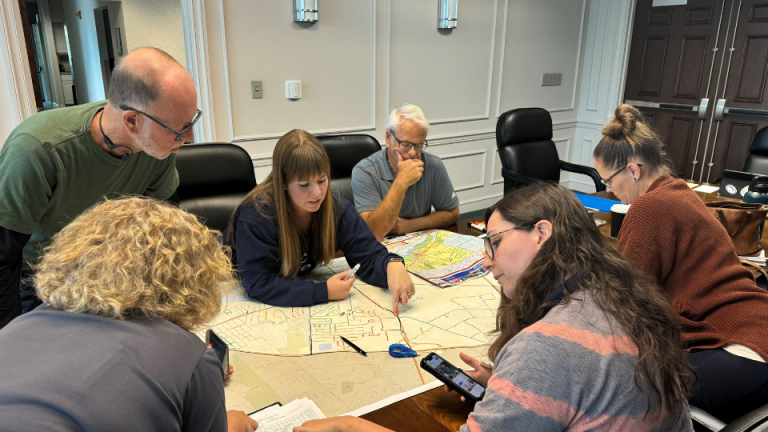
Our street tree design plan helps us plan, plant, and manage our urban forest more effectively, leading to a healthier, more diverse, and sustainable tree canopy that will provide long-term environmental, social, and economic benefits. To develop the plan, members of the city’s Environmental and Tree Advisory Commission & other volunteers spent several months working with Steph Miller, the Ohio Regional Urban Forester with the Ohio Department of Natural Resources, Division of Forestry.

How it works:

By evaluating site conditions, we have matched each planting location with the tree species most likely to thrive there. Resilient species are best suited for low‑quality sites, while high‑quality sites can support more diverse or sensitive species that add richness to the urban forest. A street‑tree design plan also helps us identify areas with poor soil that need improvement, and ongoing site assessments allow us to track whether our soil‑management efforts are working.

Maumee Receives Growth Award:   

Maumee has been honored with the Arbor Day Foundation’s 2025 Growth Award, recognizing the city’s strong commitment to expanding and improving its community forestry program. This award, approved in February 2026 during the 50th anniversary of the Tree City USA program, celebrates the meaningful progress Maumee has made in strengthening its urban forest and investing in long‑term environmental stewardship.

Tree City USA:
The Tree City USA program, administered by the National Arbor Day Foundation with support from the USDA Forest Service and state forestry programs, recognizes communities that implement four basic standards necessary to a comprehensive community tree care program.  Maumee has received this award for 34 years.


Benefits of Trees

ECONOMIC

Trees provide a tremendous economic benefit to the community. Trees have been shown to:

◊  Increase property value and resale value

◊  Reduce crime and vandalism thereby reducing insurance rates

◊  Improve test scores and life decisions among school ages girls reducing the need for social services

◊  Reduce energy consumption by reducing the need for air conditioning

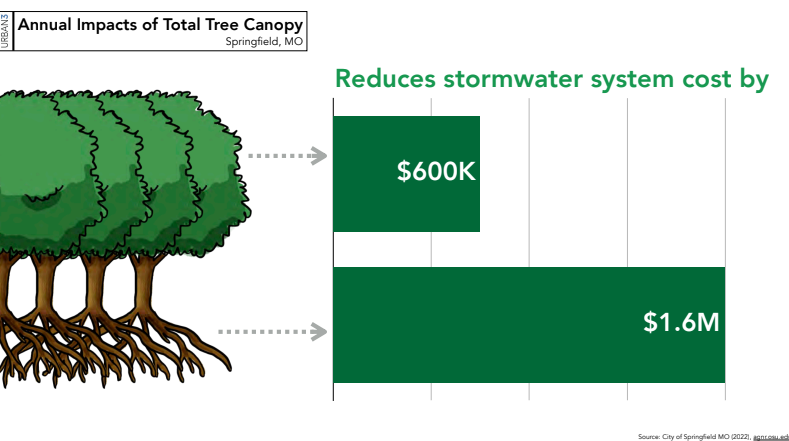
◊  Reduce storm water runoff thereby reducing the need for expanded sewer systems

Sources: USDA Forest Service, University of IL

ENVIRONMENTAL

Trees have been shown to improve the environment of the community by:

◊  Removing carbon from the air as well as preventing carbon from being burned by reducing the need for air conditioning.  Less air conditioning – less electricity needed, less electricity – less coal burned and less CO2 and air pollution

◊  Filter out air pollution and particles

◊  Improves water quality by intercepting and slowing rainfall and allowing it to seep into the ground to be filtered rather than flooding into the storm sewer carrying street grime and pollutants with it

Source:  USDA Forest Service

SOCIAL

◊  Reduces crime and vandalism thereby reducing insurance rates

◊  Improves test scores and life decisions among school ages girls reducing the need for social services

◊  Reduces stress 

Source:  University of IL

FINANCIAL

◊  Increase property values by 20%

◊  Save on energy bills – Reduce AC needs by 30%, Save energy for heating 20%-50% b/c blocks cold wind

◊  Attract business

◊  Prevent concrete/asphalt/paint from wearing & degrading as quickly

◊  Help reduce storm runoff so it doesn’t overrun our systems

◊  Trees are green infrastructure and are the only infrastructure that increases in value. All other infrastructure begins to depreciate in value as soon as it is completed.

HEALTH AND VIGOR

Healthy, vigorous trees live longer and require less maintenance; thereby maximizing benefits while minimizing cost:

◊  Improve cognitive function

◊  Better mental health

◊  Boost immune system

◊  Found to make people heal faster

◊  Filter air of pollutants & fine particles (Associated with lower rates of childhood asthma)

◊  Suppress traffic noise

◊  Slow down traffic

◊  Provide food such as fruit & nuts

◊  Decreases blood pressure

◊  Decreases stress & anxiety

◊  Produce oxygen – In 1 season, 1 mature tree can produce enough oxygen to allow 10 of us to breathe

◊  Can increase energy levels

◊  Filter harmful UV rays

◊  Deter crime/Reduce violent crime

◊  Cool out buildings/spaces, protect us from heat related deaths

◊  Clean our water

◊  Protect against flooding

◊  Provide medicines

Source:  USDA Forest Service, University of FL

QUALITY OF LIFE

◊  Living fences for privacy

◊  Keep outdoor spaces & buildings cooler in the heat

◊  Make people smile

◊. Provide a sense of place

◊. Aesthetically pleasing/beautify

◊. Reduce anger

◊  Provide a shaded respite spot

CLIMATE

◊  Decrease heat islands – cool air by 2 – 8 degrees celsius

◊  Absorb more water during large rain events (Up to 450 litres/day; Up to 150 kg/year)

◊  Absorb CO2

◊  Provide habitat & food for wildlife

◊  Prevent erosion

◊  Combat climate change

Proper Tree Planting Specifications

Proper Tree Maintenance:

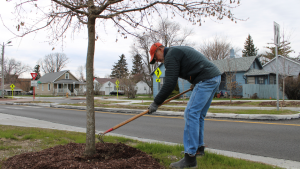
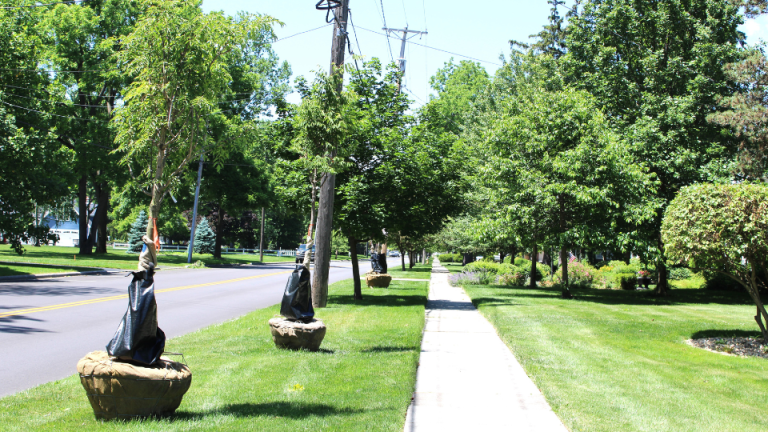
The City of Maumee is responsible for pruning, trimming, mulching, watering, and removing trees on city property. This includes the trees planted between the sidewalk and street; however, it is very helpful when residents assist with watering of new trees in the right of way.
Watering Street Trees:

Watering with a Tree Bag:

A tree watering bag holds about 20 gallons of water and releases it slowly through small holes at the bottom, providing a steady supply of moisture over five to nine hours. This deep, slow watering helps young trees develop strong roots. After using the bag, let the soil begin to dry out before watering again — consistently soggy soil or poor drainage can deprive roots of oxygen and ultimately harm the tree.

Watering from a Garden Hose:

You can also give your tree a deep weekly soak using a garden hose. Place the hose at the base of the tree and turn it on to a slow trickle — just enough for the water to soak into the soil without creating a puddle. Let it run for about an hour. Slow, deep watering like this is far more beneficial than frequent light watering, as it encourages strong root growth and ensures moisture reaches deeper into the soil.

Watering Schedule:

If your area receives less than one inch of rain in a week, the tree will need supplemental watering. Recommended weekly amounts for a 2.5‑inch‑caliper tree are:

  • Year 1: 20 gallons
  • Year 2: 12 gallons
  • Year 3: 8 gallons
  • Year 4: 3 gallons

These guidelines help ensure steady growth while preventing overwatering

Proper Tree Mulching

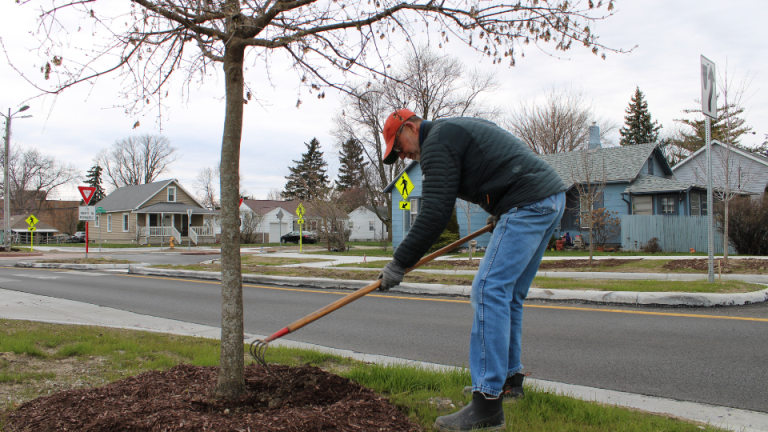
Mulching is one of the simplest and most effective ways to help a young tree grow strong and healthy. When done correctly, mulch protects the tree, improves soil conditions, and reduces stress.

Benefits of Proper Mulching

◊  Prevents damage from lawnmowers and string trimmers by creating a protective buffer.

◊  Retains soil moisture so the tree’s roots stay hydrated longer.

◊  Regulates soil temperature, keeping roots cooler in summer and warmer in winter.

◊  Reduces weeds that compete with the tree for water and nutrients.

◊  Improves soil health as organic mulch breaks down and adds nutrients.

◊  Encourages healthy root growth by creating a loose, well‑aerated soil environment.

How to Mulch Correctly

◊  Spread mulch in a 3–4 foot wide circle/square around the tree.

◊  Keep mulch 2–3 inches deep — not more.

◊  Pull mulch away from the trunk, leaving a bare space 3–6 inches wide.

◊  Use natural mulch such as shredded bark, wood chips, or leaf compost.

The Hazards of “Volcano Mulching”

“Volcano mulching” is when mulch is piled high against the trunk in a cone or mound. It is common and very harmful.

Why Volcano Mulching Is Dangerous

◊  Traps moisture against the trunk, leading to rot and get fungal disease.

◊  Encourages roots to grow upward into the mulch, creating girdling roots that can strangle the tree.

◊  Attracts pests such as rodents and insects that damage bark.

◊  Suffocates roots by preventing air from reaching the soil.

◊  Ultimately shortens the tree’s lifespan and can cause premature failure.

 The Simple Rule: Mulch should look like a donut, not a volcano. It should be wide and flat, never tall and piled.

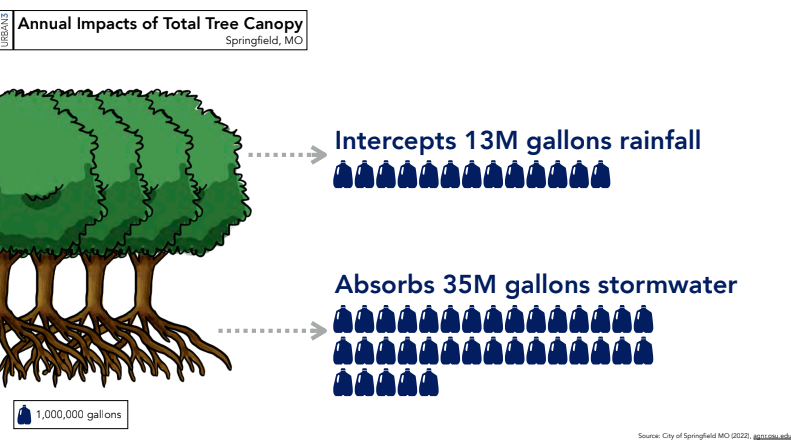
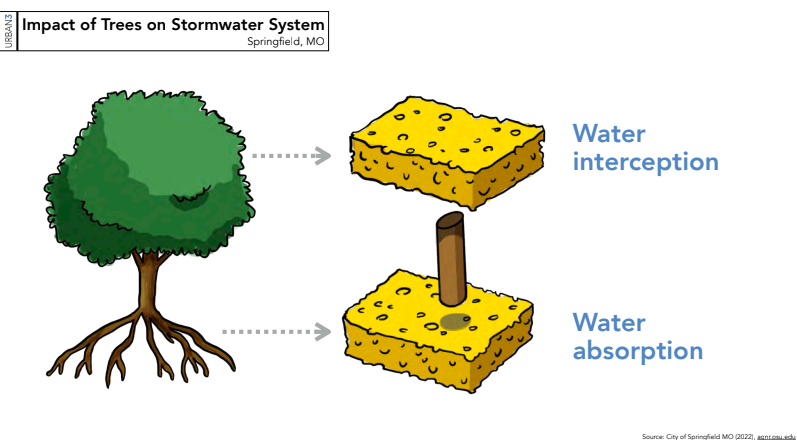
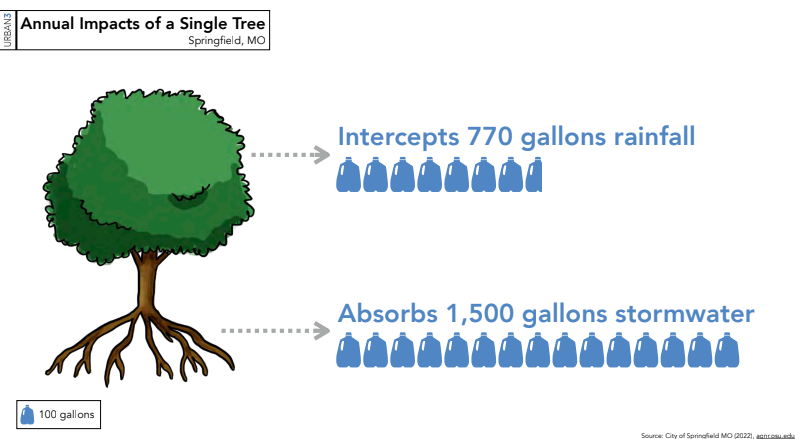
Trees act as a sponge and soak up rainwater, which keeps excess water out of the city’s sanitary system and thus aiding in the reduction of stormwater infiltration into our sanitary system.  A large tree can absorb a significant amount of water over the course of a year, with estimates varying depending on the species, size, climate, and growing conditions. On average, a mature tree can absorb between 10,000 to 26,000 gallons of water annually.

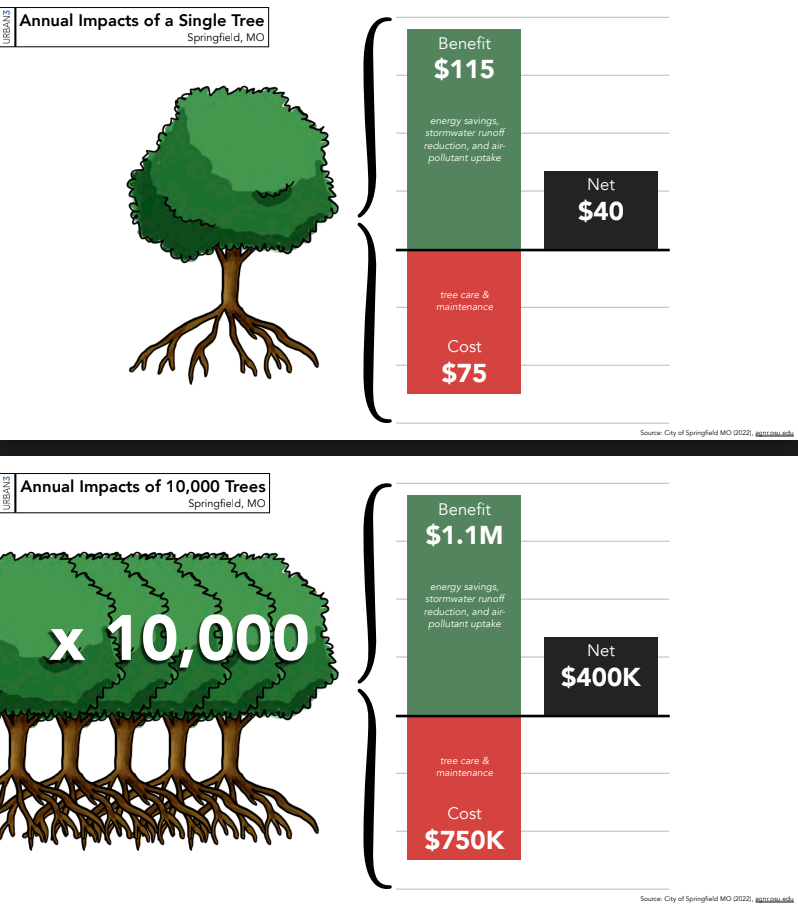
(Images courtesy of Urban3)

Members of the Environmental & Tree Advisory Commission work to develop a street tree design plan.

Over the next ten years, Maumee is hoping to get the tree canopy back to 30 percent or more.

Tree Requests

Name
Address(Required)

Maumee’s Future

Investing in urban forestry and conscientious tree placement enhances the quality of life for residents and contributes to a more sustainable and resilient community. Increasing the tree canopy is vital to preserving the longevity of our city and the benefits of a healthy tree canopy far outweigh a community without trees.