
Public Outreach & Education
One Invasive Attracts Another: What to Know About Tree of Heaven & Spotted Lanternfly
Tree of Heaven:
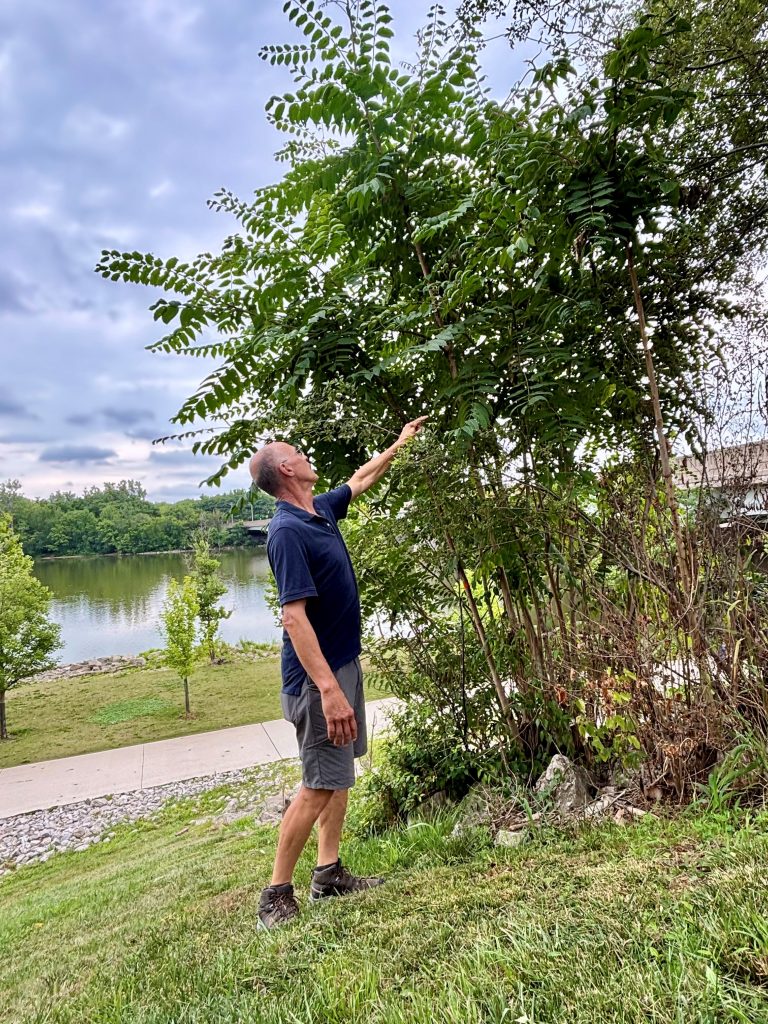
This fast-growing, non-native tree can reach up to 80 feet tall and is known for its unpleasant “burned nut” or “rancid peanut butter” odor. Introduced from China in 1784, it spread quickly due to its adaptability. Found throughout Ohio, it poses a major threat to young or disturbed forests. Female trees produce winged seeds in late summer, and all parts of the plant can be easily mistaken for native species like sumac or black walnut—but the odor is a key identifier.
Habitat & Invasive Traits:
Tree-of-Heaven thrives in disturbed soils, urban areas (alleys, sidewalks, parking lots), and natural habitats like forest edges, old fields, and dunes—avoiding only wetlands. It spreads rapidly after disturbances like timber harvests or burns.
A single female tree can produce up to 350,000 wind-dispersed seeds annually. It also spreads aggressively through root suckers and stump sprouts. Fast-growing (3–4 feet per year), it outcompetes native plants for light and nutrients. Its roots release a toxin (ailanthone) that inhibits other plant growth, allowing it to dominate gaps in the forest canopy.
Spotted Lanternfly:
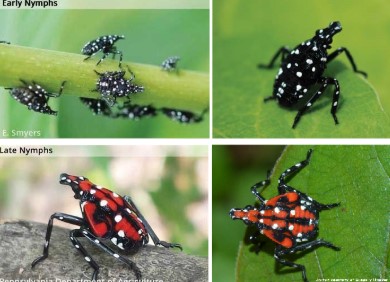
Tree of Heaven has recently attracted attention because it is the most preferred host of spotted lanternfly, an invasive insect pest also native to China. It was first identified in 2014 in southeastern Pennsylvania but is now found in at least 17 eastern states and continues to spread.
Spotted lanternflies are harmful because they can damage crops, trees, and other plants by sucking their sap, and they also secrete a sticky substance called honeydew that encourages the growth of sooty mold, which can further harm plants. This poses a significant threat to agriculture, particularly vineyards and orchards, and can also negatively impact the environment and quality of life in infested areas.
How to Control Tree of Heaven:
Hand-pull seedlings when soil is moist, removing all roots. Cutting is ineffective and often triggers aggressive regrowth.
Chemical:
Systemic herbicides (e.g., Escort, Garlon 4, Pathfinder) are most effective, especially when applied in fall or early spring using foliar, basal bark, or hack-and-squirt methods. Root systems require residual herbicide for full control.
How to Control Spotted Lanternfly:
To kill spotted lanternflies, you can physically remove them by squashing, stomping, or using a vacuum, or you can use targeted insecticides like horticultural oil or insecticidal soap. You can also use a spray bottle with a mixture of soap and water, or vinegar and water.
Water & Sewer
Learn how the City of Maumee is correcting deficiencies in its water and sewer systems. The City is working with the Ohio EPA to study and remedy Maumee’s sanitary sewer deficiencies and develop an ongoing program to stop overflows. Be assured that we are working to keep Maumee a great place to live. A big part of that is updating our infrastructure so that we act responsibly to protect your personal safety and property and our environment.

Here are a few resources to learn more about stormwater and the effects on the local environment:
US EPA – National Pollutant Discharge Elimination System (NPDES)
Clear Choices Clean Water:
Clear Choices Clean Water is an award-winning national program designed to increase awareness about the choices we each make and the impact they have on our waterways. Click here for the latest Clear Choices Clean Water Status Report 2022, Q2.
After the Storm Citizen’s Guide to Understanding Stormwater
TLC Rain Garden Initiative:
The Toledo-Lucas County (TLC) Rain Garden Initiative is a partnership made up of government agencies, educational institutions, environmental organizations, businesses and private citizens, all working together to promote natural stormwater management and urban beautification in efforts to protect our local waterways and Lake Erie. Come join us!